







treatments
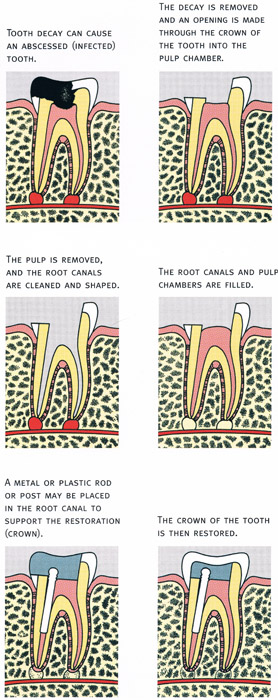
Root Canal Treatment
Root canal treatment usually involves the removal of the tooth's pulp, a small thread-like tissue that was important during tooth development. Once removed, the pulp is replaced with materials that seal off the root canal from surrounding tissues.
Years ago, diseased or injured teeth were often extracted. Today, even if the pulp in one of your teeth becomes injured or infected, the tooth can often be saved through root canal (endodontic) treatment. Edondontics is the branch of dentistry concerned with the prevention, diagnosis and treatment of diseases or injuries to the dental pulp.
Why is root canal treatment performed? Root canal treatment is usually performed because tooth decay has caused an infection in the tooth's soft tissues, causing pain, further infection, and potential tooth loss.
What does root canal treatment involve? Tooth decay is removed and an opening is made through the crown into the pulp chamber. The pulp is removed, and the root canal is cleaned and shaped. Antobiotic treatment may be required if the infection has spread further than the end of the root. A temporary filling then seals the cavity.
In the next stage of treatment, the temporary filling is removed and the cavity filled with a bio-compatible material.
Finally, the tooth is restored by a crown or permanent filling.
This is a short summary and extract from "Understanding Root Canal Treatment" brochure published by the American Dental Association. Pick up a detailed brochure at our office.